There isn’t a single, official GLP-1 diet because no two people respond to treatment in exactly the same way. Your appetite, food preferences, treatment goals, and tolerance for certain foods can all influence what works best for you.
However, one thing remains consistent: the foods you choose can have a significant impact on your experience while taking a GLP-1 medication. The right foods can help you manage common side effects like nausea and constipation while also supporting proper nutrition as your appetite decreases.
We’ll cover the foods to prioritize, the foods to limit, and why your GLP-1 diet can play an important role in supporting your results.
Key Takeaways
- There isn’t a single, official GLP-1 diet because no two people respond to treatment in exactly the same way.
- Protein and fiber should be at the center of your food choices while taking a GLP-1 medication.
- Fried foods, highly processed foods, sugary foods, and alcohol can worsen common side effects such as nausea and constipation.
- A well-balanced GLP-1 diet can help preserve muscle mass, support proper nutrition, and promote long-term weight loss.
- Small changes in your diet can have a meaningful impact on your overall treatment experience.
What Is a GLP-1 Diet?
A GLP-1 diet is an eating approach designed to support people taking GLP-1 medications. Because these medications can reduce your appetite and slow digestion, the foods you eat can directly influence your treatment experience.
You may feel full sooner, eat smaller portions, or develop digestive symptoms such as nausea or constipation after starting treatment. That’s why many healthcare providers recommend prioritizing certain foods while limiting others.
There isn't one universal GLP-1 diet because your nutritional needs can differ from someone else's.
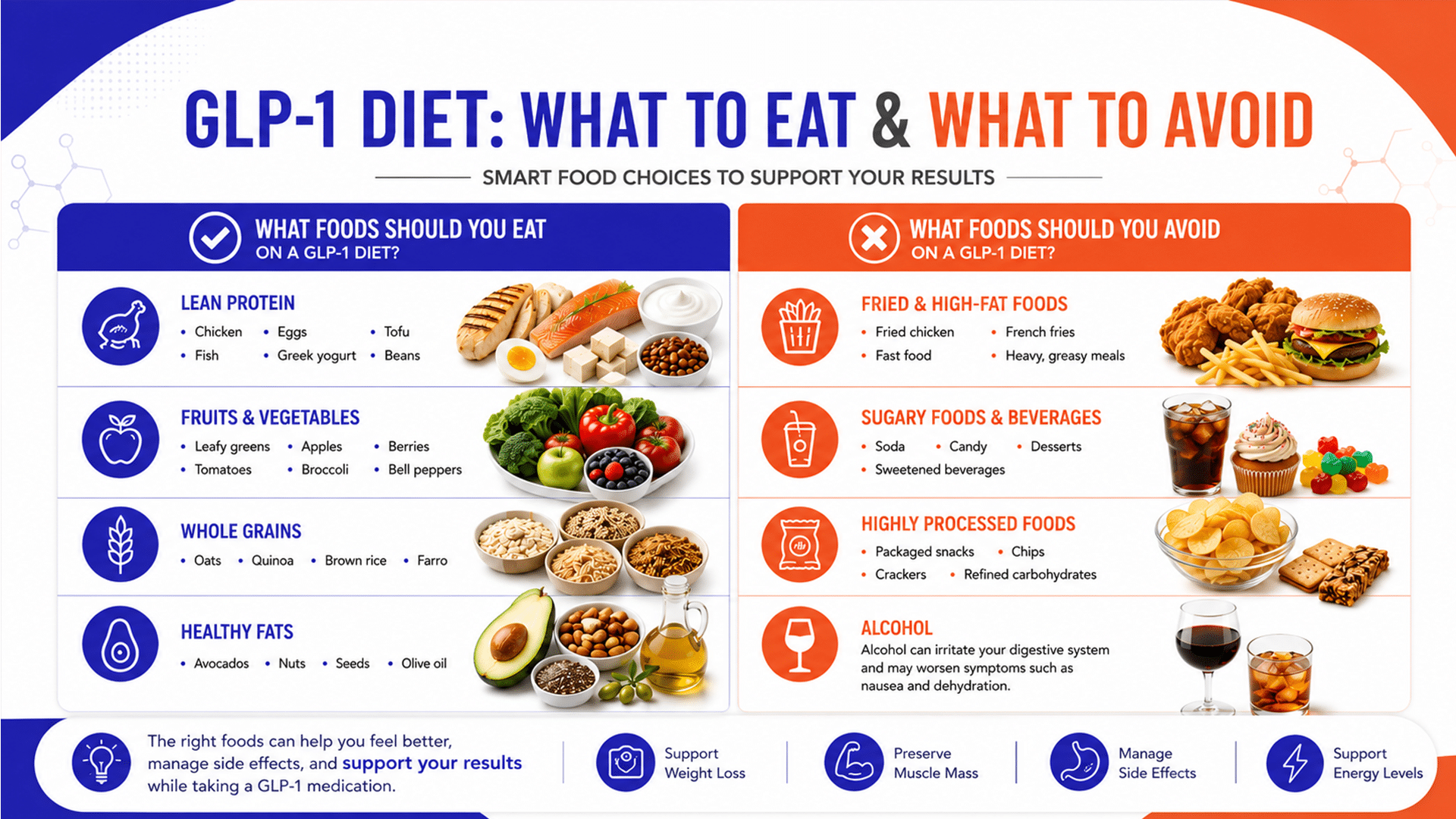
What Foods Should You Eat on a GLP-1 Diet?
Lean Protein
Prioritize protein-rich foods such as:
- Chicken
- Fish
- Eggs
- Greek yogurt
- Tofu
- Beans
Protein can help preserve muscle mass during weight loss while also helping you stay full between meals.
Fruits and Vegetables
Choose a variety of fruits and vegetables, including:
- Leafy greens
- Apples
- Berries
- Tomatoes
- Broccoli
- Bell peppers
These foods provide important vitamins, minerals, and antioxidants that support your overall health.
Whole Grains
Add whole grains such as:
- Oats
- Quinoa
- Brown rice
- Farro
Whole grains provide fiber and other nutrients that can help support digestion and maintain more stable energy levels.
Healthy Fats
Include healthy fat sources such as:
- Avocados
- Nuts
- Seeds
- Olive oil
Healthy fats can help you create more balanced meals while supporting nutrient absorption.
What Foods Should You Avoid on a GLP-1 Diet?
Some foods can worsen common GLP-1 side effects, especially while your body adjusts to treatment. Limiting these foods may help reduce digestive discomfort and support a more balanced eating pattern.
Fried and High-Fat Foods
Try to limit foods such as:
- Fried chicken
- French fries
- Fast food
- Heavy, greasy meals
These foods can be harder to digest and may worsen nausea, bloating, and stomach discomfort.
Sugary Foods and Beverages
Consider reducing your intake of:
- Soda
- Candy
- Desserts
- Sweetened beverages
Foods high in added sugar often provide very little nutritional value and can make it more difficult to maintain healthy eating habits.
Highly Processed Foods
Limit foods such as:
- Packaged snacks
- Chips
- Crackers
- Refined carbohydrates
These foods can displace more nutrient-dense options that better support your nutritional needs during treatment.
Alcohol
You don't have to eliminate these foods completely. However, paying attention to how your body responds can help you identify which foods support your treatment and which foods make you feel worse.
Save Your GLP-1 Diet Food List
Why Is a GLP-1 Diet Important?
The foods you choose during treatment can influence how you feel and how well you maintain your results. A well-balanced GLP-1 diet can help you:
- Preserve muscle mass while losing weight
- Manage side effects like nausea and constipation
- Maintain your energy levels while eating less
- Support long-term weight management through healthier eating habits